
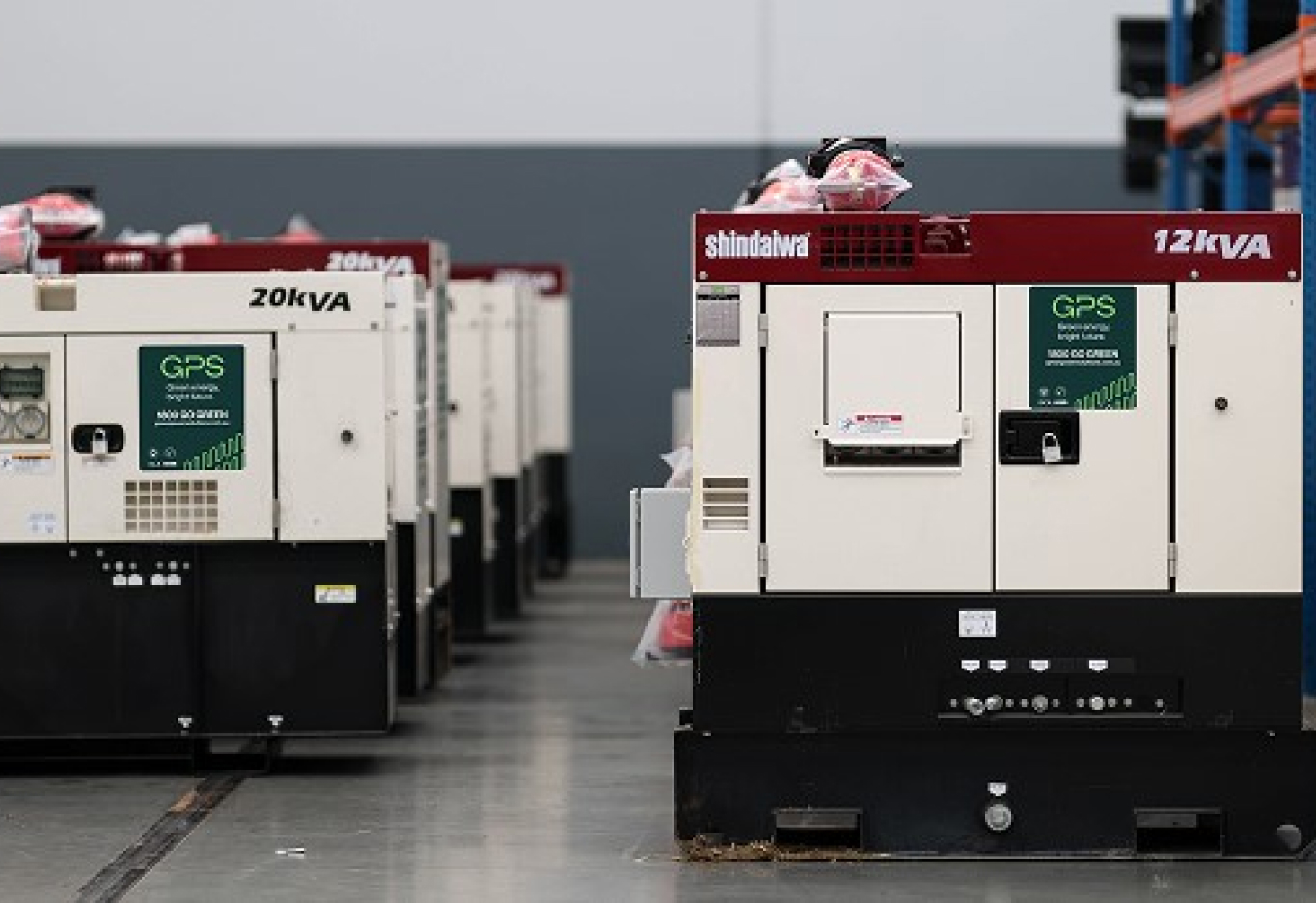
Most Australian construction, mining, and industrial sites implement extended holiday shutdowns from late December through early-to-mid January. This idle period causes power equipment to face critical risks from fuel degradation, battery discharge (up to 20% capacity loss), and microbial contamination.
- Failure Risk:15–20% of equipment fails to start after an extended shutdown without preparation.
- Prevention:85% of issues are preventable. Use the 7-item pre-shutdown checklist focusing on fuel stabilisation and fluid changes.
- Restart Priority:Schedule load bank testing two days before the 2026 restart to verify performance against a pre-shutdown baseline.
Preparing Your Site Power for the Holiday Shutdown & 2026 Restart
Picture this: It’s Monday, 9 January 2026. Your construction site is ready to restart after the Christmas break. You turn the key on your generator—and nothing happens.
You’re facing significant cost. You are not alone. Industry data reveals that 15–20% of power equipment experiences startup failures after extended holiday shutdowns, primarily due to fuel degradation, battery discharge, and inadequate preparation. For construction sites, mining operations, and data centres across Australia, these failures translate to project delays, significant additional costs, and frustrated teams.
The good news? 85% of post-holiday startup issues are completely preventable with systematic holiday shutdown power preparation.
As Australia’s leading sustainable power solutions provider, Green Power Solutions has supported hundreds of sites through the annual shutdown cycle. This comprehensive holiday shutdown power preparation guide provides the exact checklist our technical team uses to ensure reliable equipment restart in 2026.
Why 2–4 Week Shutdowns Create Power System Challenges
Most Australian construction, mining, and data centre operations implement extended shutdowns from late December through early-to-mid January.
| Industry | Typical Shutdown Period |
| Construction (NSW) | 25 December 2025 – 9 January 2026 (16 days) |
| Construction (QLD) | 22 December 2025 – 10 January 2026 (19 days) |
| Mining Operations | 2–4 weeks (varies by site and operation) |
| Data Centres | 1–2 weeks scheduled maintenance windows (core operations maintained 24/7) |
During this extended idle period, your power equipment faces three critical threats:
1. Fuel Degradation & Microbial Contamination
- Standard diesel fuel stored in generators begins degradation after 6–12 months, but the 2–4 week shutdown period accelerates moisture absorption.
- Microbial growth(bacteria and fungi) initiates in weeks 3–4. This contamination produces acidic byproducts that corrode fuel system components and clog filters.
- Biodiesel-blended fuels (B5/B20)are stable for approximately 4–12 months, but still require proactive stabiliser treatment before the December–January shutdown.
2. Battery & Electrical System Failures
- Standby battery voltage drops 2–5% monthly during inactivity. A four-week shutdown can reduce battery capacity by 8–20%.
- Corrosion on battery terminals accelerates in high-humidity Australian conditions.
- Summer temperatures accelerate battery self-discharge rates.
3. Mechanical Degradation
- Fuel lines and seals dry out. Elastomer deterioration accelerates in warm Australian storage conditions.
- Oil sludge forms if drain intervals are extended.
- Coolant systems lose effectiveness if not properly maintained.
Essential Pre-Shutdown Checklist (Week Before 22 December)
Systematic preparation prevents 85% of startup failures. Our technical team uses this seven-item checklist to ensure your equipment restarts reliably in January 2026.
| Item | Actions Required | Why It Matters |
| 1. Fuel System Preparation | Top up diesel fuel tank to minimum 75–80% capacity. Add fuel stabiliser (double-dose recommended). For biodiesel, add biocide + stability agent. Consider fuel polishing services. | Stabilisers extend storage life by blocking oxidation. Biocide prevents microbial colonies and corrosive acids. |
| 2. Oil & Fluid System Check | Drain and replace engine oil. Verify coolant concentration (50/50 antifreeze blend for Australian conditions). Inspect fluid levels. | Fresh oil prevents acid and sludge buildup. Proper coolant prevents corrosion in warm/humid environments. |
| 3. Battery & Electrical Inspection | Test battery voltage (minimum 12.6V for 12V systems). Clean terminals and apply corrosion-prevention coating. Inspect cables. | Voltage drop reduces starting capability. Pre-shutdown cleaning prevents corrosion and terminal blockages. |
| 4. Fuel & Air Filter Replacement | Replace primary fuel filter. Replace secondary filter/water separator. Replace engine air filter. | Clean filters prevent microbial debris and water from reaching injectors during startup. Clogged filters cause hard starting and rough operation. |
| 5. System Load Testing | Run generator at 50–75% load for minimum 30 minutes. Record voltage, frequency, and amperage baseline data. | Prevents wet stacking. Confirms equipment operates properly and creates a baseline for post-restart comparison. This is a critical step. |
| 6. Physical System Protection | Inspect exhaust piping for corrosion. Ensure generator is dry and protected from weather (tarp if outdoor storage). Verify drainage points are unobstructed. | Moisture ingress is a primary failure cause. Physical inspection identifies corrosion that accelerates during the shutdown period. |
| 7. Shutdown Documentation | Record shutdown date, fuel type, and stabiliser added. Document pre-shutdown oil pressure, battery voltage, and load test results. Create a restart checklist. | Documentation identifies trend patterns and supports warranty claims if issues arise during restart. |
Ready to ensure your equipment is properly prepared? Book your professional pre-shutdown inspection to guarantee availability and proper preparation time for optimal holiday shutdown power preparation. Call 1800 464 7336 today.
Industry-Specific Shutdown Considerations
| Industry | Primary Risks | Preparation Priorities | Green Power Solutions Tip |
| Construction Sites | Outdoor equipment exposure to summer weather. Theft risk. Inconsistent operator experience. | Secure generator storage. Assign single trained operator for restart. Plan restart 2–3 days before site reopening. | Our emergency service provides immediate backup generators whilst troubleshooting your primary unit. |
| Mining Operations | Remote locations with limited immediate support. Critical redundancy expectations. High-load, continuous-duty expectations. | Perform comprehensive pre-shutdown diagnostics (100% load bank test). Arrange service provider availability before restart date. | Our biodiesel-ready generators meet mining sustainability reporting requirements. We provide 24/7 emergency response for remote mine sites. |
| Data Centres | Zero downtime tolerance. Seamless load transfer required. Sensitive electronics demand stable voltage/frequency. | Implement NFPA 110 commissioning requirements. Perform step-loading load bank testing. Verify ATS coordination. | Our load bank testing services validate critical infrastructure readiness and provide documentation meeting NFPA 110 standards. |
2026 Restart Preparation Checklist
Following systematic restart procedures for your holiday shutdown power preparation helps you detect and resolve potential issues before placing your generators back into operational service.
Pre-Restart Inspection (1–2 Days Before Startup)
- Visual System Inspection:Check for fuel leaks, oil seeps, coolant drips. Verify battery connections are tight and corrosion-free. Check fuel tank level.
- Fuel System Verification:If fuel is older than three months, extract a fuel sample for visual inspection (clear vs. cloudy/dark). Consider fuel polishing if contamination is suspected. Prime fuel system 2–3 minutes before cold start.
- Oil System Check:Verify oil level on dipstick (should show minimum full mark). Confirm oil colour is amber/brown (dark black indicates contamination; drain and replace).
Restart Procedure (Systematic Startup Process)
- Pre-Start Cycle (2–3 minutes):Key to “On” position to allow fuel pump to prime. Observe battery voltage indicator.
- Initial Startup (5–10 seconds):Turn key to start. Do NOT exceed 10 seconds cranking.
- Warm-Up Phase (5–10 minutes):Allow engine to idle. Monitor oil pressure gauge. Observe exhaust smoke colour (light smoke initially normal; black smoke indicates fuel issues).
- Load Application (Gradual Increase):Apply load in 25% increments at 5-minute intervals. Monitor voltage stability (±5% variation acceptable).
- Full Load Operation (20–30 minutes):Run at 100% rated load for minimum 20 minutes. Monitor temperature and listen for mechanical stresses.
Post-Restart Documentation
Record all voltage, frequency, amperage, and temperature readings. Compare against pre-shutdown baseline data to identify any performance degradation.
2026 Compliance & Sustainability Trends
- Emissions Compliance:Australia mandates Euro Stage V emissions standards for new power equipment. Existing compliant equipment requires no regulatory changes for 2026.
- Sustainability & Environmental Reporting:Biodiesel and renewable fuel usage is expected to continue growing in 2026 as sustainability reporting becomes increasingly important to Australian businesses. Our biodiesel-ready generators reduce emissions by up to 78%.
- Load Bank Testing Standardisation:The NFPA 110 requirements are gaining broader adoption across data centre and critical infrastructure sectors. Load bank testing may become industry standard for holiday restart validation.
How Professional Services Support Holiday Readiness
Professional holiday shutdown power preparation services ensure your equipment is properly maintained, tested, and ready for reliable restart in January 2026.
- Pre-Shutdown Preparation:Comprehensive 7-point checklist implementation, fuel quality testing, battery testing, and protective storage arrangements.
- Post-Restart Validation:Systematic restart procedures, load bank testing and performance verification, and fuel system inspection.
- 24/7 Emergency Response:Our technical team provides emergency support throughout the holiday period. If your equipment fails on restart day, we deliver immediate backup generators.
- Biodiesel & Sustainability Expertise:We specialise in biodiesel-ready equipment and provide expert guidance on fuel storage, stability additives, and biodiesel-specific maintenance.
Book Your Pre-Shutdown Inspection Now
The Christmas shutdown approaches quickly. Book your holiday shutdown power preparation inspection to ensure availability and proper preparation time for comprehensive generator maintenance before shutdown.
Don’t gamble with power equipment reliability in January 2026. Professional holiday shutdown power preparation ensures your site restarts smoothly.
Contact Green Power Solutions on 1800 464 7336