
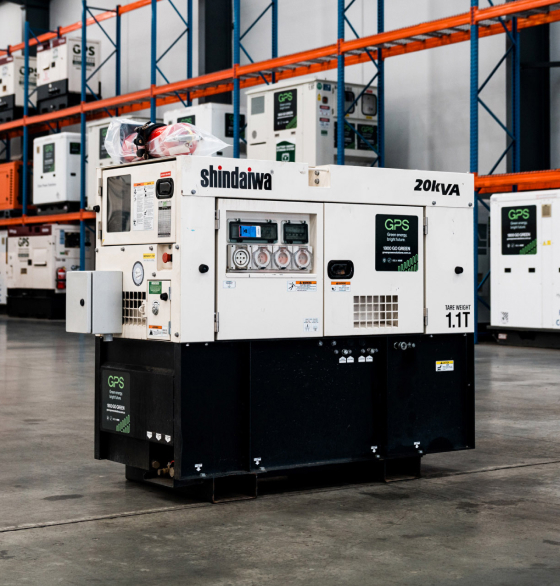
The choice between hiring and purchasing a generator depends on your annual usage frequency and long-term project stability. If your business requires power for more than 60% of the year, purchasing usually offers a better return on investment. For project-based work, emergency backup, or variable power needs, hiring is typically the more strategic move as it eliminates capital outlay and maintenance responsibilities.
- Financial Break-even. Most Australian businesses reach the transition point between 150 and 200 days of use per year.
- Maintenance Burden. Hiring transfers 100% of servicing and repair risks to the provider. Purchasing requires an annual maintenance budget of 8% to 12% of the initial cost.
- Operational Flexibility. Hire models allow you to scale equipment size up or down for every project. Ownership locks you into a specific capacity.
In the current Australian industrial landscape, reliable power is not just a convenience. It is a critical asset. Whether you are managing a remote mining site in Western Australia or a large-scale construction project in Sydney, the decision to hire or buy a generator will echo through your balance sheet for years. Many procurement managers look only at the sticker price of a new unit versus a weekly hire rate. This approach is far too narrow.
A strategic framework requires you to look at the total cost of ownership, the technical reality of maintenance, and the agility of your business. As the market for generators in Australia grows towards a projected value of over one billion dollars by 2033, the complexity of these machines is also increasing. You aren’t just choosing a piece of hardware. You are choosing a long-term operational strategy.
Evaluating Your Usage Patterns
The first step in any strategic framework is an honest assessment of how the equipment will be used. This sounds simple but it is where many businesses make their first mistake.
The Short-Term Project Scenario
If you are a contractor working on infrastructure projects with clear start and end dates, hiring is almost always the superior choice. Projects often have fluctuating power demands. You might need a 500 kVA unit during the initial heavy lifting phase and only a 20 kVA unit for site sheds later on.
Hiring allows you to right-size your power solution for every phase. This ensures you are not paying for fuel to run a massive engine that is only operating at 10% capacity. This phenomenon, known as light loading or wet stacking, can actually damage a generator that you own. When you hire, you simply swap the unit out for a smaller one when the demand drops.
The Permanent Facility Scenario
Conversely, if you are running a manufacturing plant or a data centre where the generator serves as a permanent standby unit, purchasing starts to look more attractive. When a unit is intended to stay in one location for five to ten years, the cumulative cost of hire will eventually dwarf the purchase price. However, even in these permanent scenarios, you must consider whether your internal team has the skills to manage the asset. If you don’t have a dedicated mechanical team, the ease of a long-term hire contract with included servicing might still outweigh the benefits of ownership.
The Financial Reality of Ownership
Buying a generator involves much more than the initial invoice. To make a strategic decision, you must calculate the Total Cost of Ownership (TCO).
Upfront Capital Expenditure
The initial purchase price of a high-quality industrial generator in Australia can range from $20,000 to well over $200,000. This is a significant hit to your cash flow. This capital is then locked away in a depreciating asset rather than being used for business expansion or research and development. In a high-interest environment, the opportunity cost of that capital is a major factor.
Ongoing Maintenance and Hidden Costs
The purchase price is generally only about 30% to 40% of what that generator will cost you over a decade. You must factor in the following expenses.
First, there is insurance and registration. Then, you have the cost of secure storage when the unit is not in use. The most significant hidden cost is maintenance. Australian conditions are harsh. Dust, heat, and moisture mean that generators require rigorous servicing schedules. You should expect to spend between 8% and 12% of the purchase price every year just on routine maintenance and preventative repairs. If you neglect this, the resale value of your asset will plummet.
Tax and Depreciation
From a tax perspective, purchasing an asset means you must deal with depreciation schedules set by the Australian Taxation Office. While there are sometimes immediate write-off incentives for small businesses, these rules change frequently. Hiring is much simpler. Hire fees are usually treated as a direct operating expense. This means they are often 100% tax-deductible in the year the expense is incurred. This simplifies your accounting and provides a clearer picture of project-specific profitability.
The Benefits of a Hire Model
Beyond the financial numbers, the hire model offers several operational advantages that are hard to quantify but easy to appreciate when things go wrong.
Financial Flexibility and OPEX
Hiring turns a fixed cost into a variable cost. If a project is delayed or cancelled, you can return the hired equipment and stop the expense immediately. If you own the equipment, you continue to pay for its storage, insurance, and maintenance even while it sits idle. For businesses in volatile sectors like mining or construction, this flexibility is a powerful risk management tool.
Risk Mitigation and Technical Support
When you hire from a specialist like Green Power Solutions, you are essentially outsourcing your risk. If a hired generator fails at 2:00 AM on a Sunday, it is the provider’s responsibility to fix it. Our 24/7 emergency support ensures that downtime is kept to an absolute minimum.
If you own the unit, that failure is your problem. You have to find a technician, hope they have the right spare parts, and pay emergency call-out fees. For many businesses, the peace of mind that comes with a hire agreement is worth more than the potential savings of ownership.
Maintenance and Compliance Responsibilities
Ownership comes with a heavy burden of compliance. In Australia, industrial equipment must meet strict safety and environmental standards.
Technical Upkeep
Owners must manage several technical issues that hire companies handle automatically. This includes load bank testing to ensure the engine can handle its rated capacity. It also includes fuel management. Diesel fuel can degrade over time or become contaminated with water and bacteria, often called diesel bug. If you own a generator that sits idle for six months, the fuel might be unusable when you finally need the power. Hire companies constantly rotate their stock and manage fuel quality so the equipment is always ready to run.
Compliance Documentation
You are also responsible for keeping detailed service logs and safety certificates. This is vital for insurance purposes and for meeting site-specific safety requirements. When you hire, all this documentation is provided for you. This reduces the administrative burden on your project managers and ensures you are always compliant with the latest regulations.
Sustainability and Modern Technology
The world of power generation is changing fast. Modern generators are far more efficient and cleaner than models from even five years ago.
Access to the Latest Technology
When you hire, you always have access to the latest technology. This includes biodiesel-ready engines that can reduce carbon emissions by up to 78%. It also includes advanced telematics that allow you to monitor fuel levels and engine performance from your smartphone.
If you purchase a power generator today, you are locked into that technology for the next decade. As environmental regulations become stricter in Australia, an older unit might eventually become a liability. Hiring allows you to upgrade to the latest green technology as soon as it becomes available without any capital loss.
The Strategic Decision Matrix
To help simplify your choice, consider this quick decision matrix.
Choose Hiring if
- Your project duration is less than 12 months.
- Your power requirements change frequently.
- You want to keep your capital free for other investments.
- You do not have an in-house mechanical maintenance team.
- You need 100% guaranteed uptime with 24/7 support.
Choose Purchasing if
- The generator will run for more than 200 days per year.
- The unit will be in a permanent or long-term fixed location.
- You have very specific customisation requirements for the enclosure or fuel system.
- You have the internal infrastructure to manage servicing and compliance.
- You are looking for a long-term asset to add to your company balance sheet.
Making the Strategic Call for Your Business
There is no single right answer to the hire versus purchase debate. The best choice is the one that aligns with your specific operational needs and financial structure. If you prioritise flexibility, risk mitigation, and access to the latest technology, the hire model is difficult to beat. If you have a stable, long-term requirement and the capacity to manage a complex mechanical asset, purchasing can offer significant long-term savings.
At Green Power Solutions, we assist businesses through this exact framework every day. We can help you calculate your break-even point and determine which path will serve your bottom line most effectively.
Frequently Asked Questions
How do I calculate whether hiring or buying is cheaper for my business?
You should start by estimating the total number of days the generator will be active over the next three years. Multiply the daily hire rate by this number. Then, compare that to the purchase price plus an annual 10% maintenance fee and insurance. Don’t forget to account for the tax benefits of OPEX versus CAPEX.
What is the typical break-even point for purchasing vs hiring?
In the Australian market, the financial shift usually happens between 150 and 200 days of use per year. If you use the equipment for less than 60% of the year, hiring is almost always the more economical choice.
What happens if a hired generator breaks down on a remote site?
When you hire from a reputable provider, 24/7 support is included. We provide rapid on-site repairs or a complete unit replacement. This ensures your project continues with minimal disruption.
Can I hire a generator first to see if I should buy it later?
Yes, this is a very common strategy. Hiring first allows you to confirm your actual power consumption in a real-world environment. This prevents you from making the expensive mistake of buying a unit that is either too small or unnecessarily large.
Secure Your Power Strategy Today
Is your current approach truly the most cost-effective way to power your operations? Don’t leave your project success to chance. Contact Green Power Solutions today for a tailored capital expenditure analysis. Our team will help you choose the right model to protect your bottom line and keep your site running at peak efficiency.
Investing in a biofuel generator isn’t just about buying a piece of equipment; it’s about investing in a more predictable, sustainable, and resilient future for your operations.