
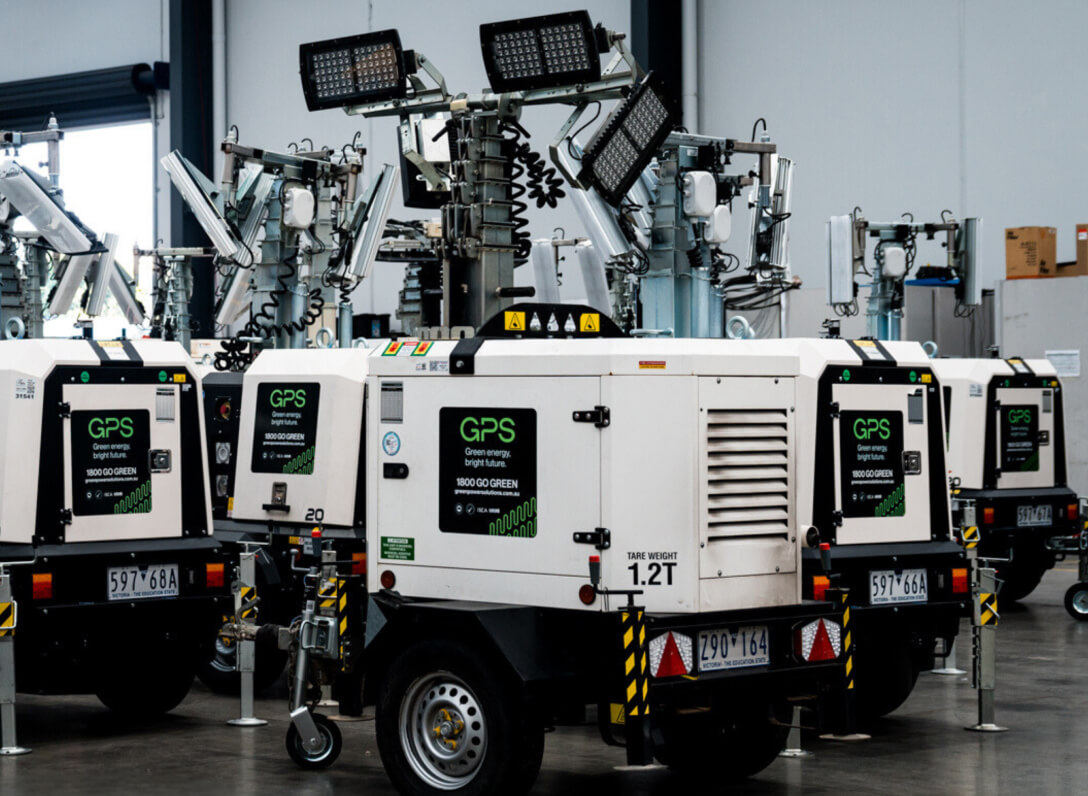
Planning power for an Australian summer festival requires balancing technical load calculations with strict safety regulations and heat management strategies.
- Calculate loads precisely.You must use a verified equipment inventory and add a 20% safety margin to handle startup surges and heat derating.
- Separate your zones.Dedicated generators for stages, vendors, and amenities prevent single points of failure and improve reliability.
- Manage the heat.Australian summer temperatures can reduce generator output by 10-20%, so you must size up capacity and position equipment for maximum airflow.
The Australian summer festival season brings excitement, music, and thousands of attendees to outdoor venues across the country. It is a vibrant time for the industry, but for event producers, the soaring temperatures and remote locations bring a unique set of logistical challenges. While lineup curation and ticket sales often grab the headlines, the success of every outdoor gathering depends on one invisible but critical factor. That factor is reliable power infrastructure.
Power failures are not just inconvenient interruptions. They can destroy a reputation in minutes. Imagine the headline act’s sound system cutting out mid-performance, leaving a crowd of thousands in silence. Consider the safety risks if lighting fails during an evening storm, or the financial loss if food vendors lose refrigeration on a 35-degree day. Attendees remember these moments for all the wrong reasons, and social media ensures the world knows about them instantly.
Planning festival power requires you to balance multiple complex variables. You must calculate accurate loads, select the right generator technologies, manage strict noise compliance, and handle fuel logistics safely. This guide provides a practical framework for planning reliable, compliant, and sustainable power solutions for your next summer event.
1. Calculating Power Needs for Festival Events
Accurate power calculation is the absolute foundation of reliable infrastructure. If you underestimate your requirements, you risk tripping breakers and ruining performances. If you overestimate excessively, you waste your budget on fuel and oversized units that run inefficiently.
The Three-Step Calculation Method
To get this right, you should follow a systematic, evidence-based process rather than relying on guesswork or previous years’ estimates.
Step 1: Create a Detailed Equipment Inventory
Start by documenting every piece of electrical equipment across all festival zones. This list must be comprehensive. It includes stage sound systems, massive lighting rigs, food vendor fryers, coffee machines, and public amenity lighting. For each item, you must record two figures: the running watts and the starting watts.
The distinction is vital. Equipment with motors or compressors, such as refrigeration units and air compressors, often requires two to three times their running wattage just to start up. If you only calculate for running watts, your system will likely fail when vendors power up their fridges simultaneously.
Step 2: Calculate Simultaneous Loads
Once you have your inventory, add the total watts for equipment that will operate at the same time. You need to understand your event’s usage patterns. Peak loads typically hit during evening headline performances. At this moment, stages are drawing maximum power for audio and lighting, food vendors are cooking at full capacity, and all amenity lighting is active. This is your critical number.
Step 3: Apply a Safety Margin
Multiply your total calculated peak wattage by 1.2. This 20% safety margin is non-negotiable. It provides the necessary headroom for unexpected power spikes and the addition of last-minute equipment. Crucially, it compensates for the inevitable performance degradation generators suffer in the Australian summer heat.
Zone-Based Load Separation
Industry best practice recommends dedicating separate generators to different festival zones. You should never power an entire festival from a single massive unit, no matter how efficient it seems.
This containment strategy prevents cascading failures. If a food vendor’s faulty fridge trips a circuit, it should not silence the main stage. Analysis of large-scale music festivals has shown that zone separation reduces power-related disruptions by over 70%.
Typical Zone Allocation:
- Main Stage:Use dedicated generators exclusively for audio and lighting. This prevents interference and ensures the show goes on even if other areas fail.
- Food Court:Establish a separate supply for vendor cooking and refrigeration. These are high-draw, fluctuating loads that can destabilise sensitive audio equipment.
- Production:Provide independent power for offices, Wi-Fi, and backstage areas to ensure communication lines remain open during emergencies.
- Public Facilities:Isolate the supply for toilets, medical tents, and security lighting to ensure safety systems remain operational at all times.
- Managing Australian Summer Conditions
Summer heat is a hidden load factor that you cannot ignore. In Australia, high ambient temperatures significantly affect both generator performance and electrical distribution equipment.
Technical research demonstrates that generator output can reduce by 10-20% when operating in extreme heat above 35°C. The engine struggles to cool itself, and the air density changes, reducing combustion efficiency. Furthermore, electrical distribution components like circuit breakers become thermally sensitive. In direct sunlight, a breaker might trip at a current much lower than its rated capacity, causing baffling power outages even when you are theoretically within your load limits.
Heat Mitigation Strategies
You can implement specific strategies to protect your power supply during a forecast heatwave.
- Upsize Capacity:If the forecast predicts high temperatures, increase your generator capacity by an additional 20%. This ensures the generator runs at a lower percentage of its maximum load, keeping the engine cooler.
- Strategic Positioning:Place generators in well-ventilated locations. Avoid pushing them into corners or areas behind solid structures where hot exhaust air gets trapped and recirculated into the air intake.
- Shade Structures:Implement simple shade canopies over distribution boxes and cable runs. Keeping this equipment out of direct sunlight can reduce operating temperatures by 10-15°C, preventing thermal tripping.
- Cable Ratings:Use higher-gauge cables than the minimum requirement. Heat increases electrical resistance in cables, which causes voltage drop. Thicker cables mitigate this risk.
3. Generator Sizing and Placement Strategies
Selecting the right generator technology is just as important as sizing. Modern events have options beyond the standard noisy diesel box.
Diesel Generators: These remain the traditional workhorses for large-scale events. They are fuel-efficient and reliable but can be noisy. They are best suited for main power far away from crowds.
Silent Generators: These units feature advanced acoustic enclosures that reduce noise by 15-25 dBA. They are the ideal choice for areas near stages, VIP zones, or residential boundaries.
Hybrid Systems: These innovative units combine diesel generators with battery storage. They reduce fuel consumption by 20-30% and offer silent operation during low-load periods, such as overnight security lighting.
Strategic Placement for Noise Control
Generator noise is one of the most common complaints at outdoor festivals. You can use the physics of sound to your advantage. The inverse-square law states that doubling the distance from a noise source reduces the sound level by approximately 6 decibels.
Practical Application:
- Distance:Position main diesel units 100-200 metres away from audience areas and residential boundaries. This distance alone can drop noise levels from “construction site” to “conversation” volume.
- Barriers:Use acoustic fencing or utilise natural terrain to block the line-of-sight between the generator and the crowd.
- Orientation:Direct exhaust outlets and radiator fans away from crowds and performance spaces.
A generator operating at 10 metres might read 85 dBA. Simply moving it to 80 metres can drop that level to 67 dBA, making a massive difference to the attendee experience.
4. Lighting Design for Safety and Atmosphere
Festival lighting serves two distinct but equally critical purposes. It must meet strict safety standards while creating an immersive atmosphere.
Safety and Compliance
Australian standards are strict regarding public safety. Regulations require lighting that allows for safe movement and evacuation. You must ensure pathway lighting meets AS 1158 standards to prevent trip hazards in dark fields. Emergency lighting with battery backup is mandatory for all evacuation routes and decision points to ensuring patrons can exit safely even during a total power failure.
The LED Revolution
Switching to LED technology transforms your power planning. Case studies from medium-scale festivals have shown that converting from halogen to LED can reduce lighting power consumption by nearly 70%.
Benefits of LED:
- Lower Power Draw:This drastically reduces the size of the required generator and fuel bill.
- Less Heat:LED fixtures generate minimal heat, reducing fire risk and the need for air conditioning in enclosed tents.
- Better Control:Modern LEDs offer dynamic colour changing and effects, allowing you to change the mood of a zone instantly without manual gels.
5. Fuel Logistics and Safety Management
Fuel handling is heavily regulated in Australia. Adhering to Australian Standard AS1940:2017 is essential for the safety of your staff and patrons.
Separation Distances
You must maintain specific separation distances between fuel sources and public areas. Bulk fuel tanks of 42,000 litres require a minimum separation of 12 metres from public zones. Even smaller stand-alone generators need at least 1 metre of separation from each other to prevent fire spread.
Refuelling Safety
The area around a refuelling operation is classified as a hazardous zone where explosive gas atmospheres may occur. Ignition sources are strictly prohibited.
Key Safety Protocols:
- Bonding and Grounding:Always bond equipment to prevent static sparks during fuel transfer.
- Fire Extinguishers:Keep a minimum 9kg dry chemical powder extinguisher within 5 metres of any fuel storage or transfer point.
- Timing:Schedule refuelling during low-activity periods, such as early morning. This minimises the risk to the public and allows generators to run uninterrupted during peak evening hours.
Sustainable Fuel Options
You can significantly reduce your environmental impact by choosing biodiesel. It works in standard diesel generators without modification.
Research indicates that biodiesel reduces carbon output by up to 82% compared to conventional diesel. It is also non-toxic and biodegradable, making it a much safer choice for sensitive outdoor venues like parks and farmland. Waste Vegetable Oil (WVO) biodiesel is widely considered a zero-carbon option because the carbon emitted was absorbed during the plant’s growth phase.
The Hallmark of a Professionally Produced Event
Reliable festival power does not happen by accident. It requires technical precision, regulatory awareness, and strategic planning.
You must calculate your loads carefully, respecting the impact of the Australian summer heat. You need to design your site layout to manage noise and ensure safety distances are met. And you should embrace new technologies like LED lighting and biodiesel to reduce your environmental footprint while maintaining reliability.
When you get the power right, it fades into the background. The lights shine, the music plays, and your attendees enjoy an unforgettable experience without a single thought about the generators humming in the distance. That is the hallmark of a professionally produced event.
Plan Your Event Power Like a Pro
Calculating loads and managing compliance can be complex. Download our comprehensive checklist to ensure you have covered every critical step, from generator sizing to fuel logistics.
Schedule your free assessment now for a complimentary consultation and discover how we can help you power your business or home sustainably!