
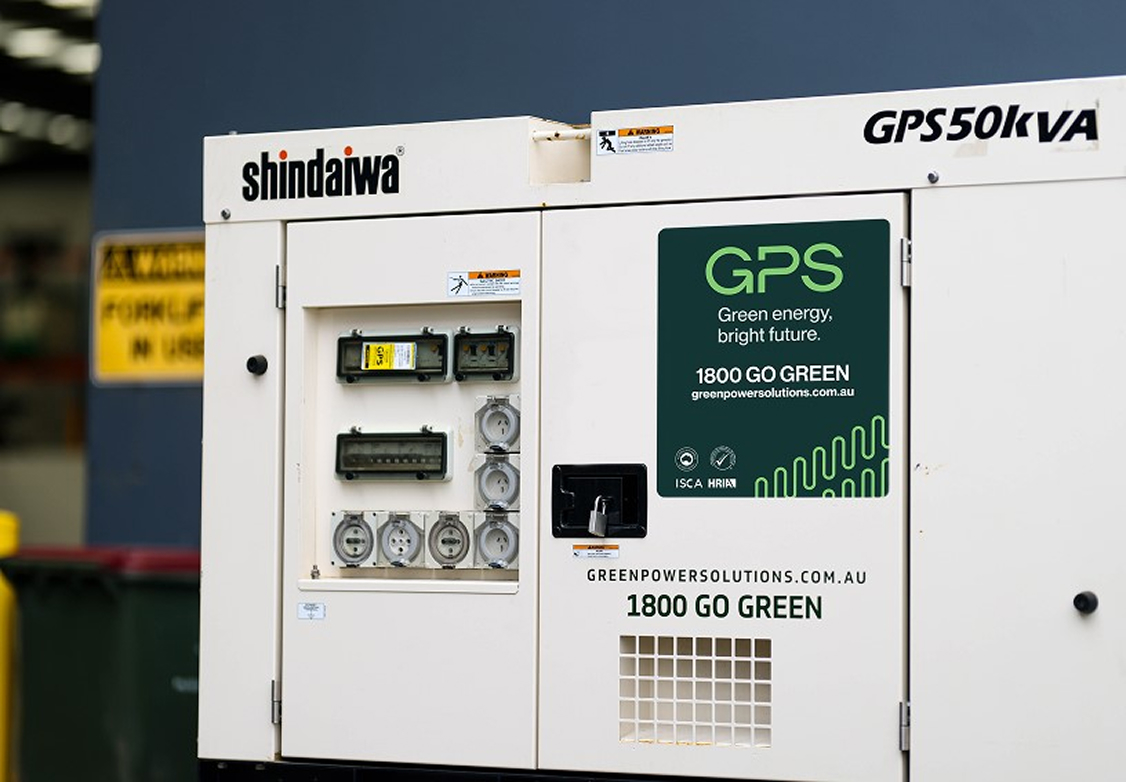
Biodiesel generators offer substantial environmental benefits beyond reduced carbon emissions. These include enhanced environmental safety through biodegradability and lower toxicity, improved air quality, support for regulatory compliance, and a significant contribution to Australia’s circular economy.
- Achieve up to 86% lower greenhouse gas emissions compared to conventional diesel, aiding Australia’s decarbonisation efforts.
- Biodegrade approximately four times faster than petroleum diesel and are less toxic to aquatic life, significantly reducing the environmental impact of spills or leaks.
- Actively support Australia’s circular economy by transforming waste materials like used cooking oil and animal tallow into valuable, renewable fuel.
When Australian businesses evaluate power generation solutions, the conversation typically centres on reliability, cost efficiency, and operational capacity. Yet in 2025, environmental performance has emerged as equally critical. It is not merely a compliance checkbox. It is a strategic differentiator that influences regulatory approval, community relations, stakeholder confidence, and long-term operational viability.
Biodiesel generators represent a sophisticated answer to this multi-dimensional challenge. Whilst the immediate association with ‘green power’ often focuses on reduced carbon emissions, the environmental benefits extend far deeper. They touch upon ecosystem health, air quality, regulatory compliance, and circular economy participation.
This comprehensive analysis examines the full spectrum of environmental advantages that biodiesel generators deliver for mining operations, construction sites, and industrial facilities across Australia. It is supported by current research, quantitative data, and real-world implementation insights.
A Deep Dive into Biodiesel’s 86% Emissions Advantage
Australia’s industrial sector faces increasing pressure to demonstrate measurable progress towards net-zero targets. The mining and construction industries contribute significantly to national greenhouse gas emissions. Both are heavily reliant on diesel-powered equipment and generators. Traditional diesel generators, whilst reliable and powerful, produce substantial carbon dioxide alongside other greenhouse gases.
The urgency for alternatives has intensified. The Australian Government has committed to reducing national emissions by 43% below 2005 levels by 2030. Industrial operators require power solutions that deliver genuine environmental improvement without compromising operational requirements.
Quantifying Biodiesel’s Carbon Advantage
Recent Australian research provides compelling evidence of biodiesel’s carbon reduction potential.
- Studies show biodiesel from sustainable forest resources can achieve up to 85% reduction in greenhouse gas emissions compared to conventional diesel.
- More impressively, biodiesel derived from sustainable forestry practices and agricultural waste achieves reductions of up to 86%. Source: Sustainable Future Australia – Australian Biodiesel’s Future How Sustainable Forestry Is Powering Green Energy – 2025
The mechanism behind this reduction is threefold:
- Lifecycle Carbon AccountingUnlike fossil diesel, biodiesel is produced from renewable biomass that absorbed atmospheric carbon during growth. This creates a substantially lower net carbon footprint across the fuel’s entire lifecycle.
- Cleaner Combustion ChemistryBiodiesel contains 10-11% oxygen by weight, facilitating more complete combustion. This results in lower carbon monoxide and unburned hydrocarbon emissions during power generation.
- Reduced Upstream EmissionsAustralian-produced biodiesel eliminates the carbon-intensive extraction, refining, and long-distance transportation associated with petroleum diesel, especially when sourced locally.
Real-World Performance Data
Field implementation across Australian operations demonstrates consistent emissions benefits.
- Australian agricultural operations using B20 blends (20% biodiesel, 80% conventional diesel) have reported emission reductions of 15-20%.
- For industrial generators running on higher biodiesel concentrations or pure biodiesel (B100), the reductions scale proportionally.
For perspective. For every litre of forest-derived biodiesel used, approximately 2.5 kilograms of carbon dioxide emissions are avoided compared to petroleum diesel. On a large mining site operating multiple 500 kVA generators consuming 2,000 litres daily, this prevents approximately 5 tonnes of CO₂ emissions per day. That is 1,825 tonnes annually.
Cumulative National Impact
The aggregated effect of biodiesel adoption across Australian industry shows significant environmental contribution.
- Recent data from the Australian Renewable Energy Agency (ARENA) shows biodiesel adoption in commercial fleets has already prevented over 1.2 million tonnes of CO₂ equivalent release. Source: Sustainable Future Australia – Australian Biodiesel’s Future – 2025
As generator applications expand into stationary power generation, this cumulative impact will accelerate substantially.
Feedstock Variations and Carbon Intensity
Not all biodiesel delivers identical carbon performance. The feedstock source significantly influences lifecycle emissions.
- Waste cooking oil biodiesel: Highest carbon reduction (85-90%) as it repurposes waste.
- Sustainable forestry biodiesel: 80-86% reduction with responsible forest management.
- Purpose-grown crop biodiesel: 40-70% reduction depending on agricultural practices.
- Animal tallow biodiesel: 75-85% reduction by using slaughterhouse byproducts.
Australian-produced biodiesel can achieve overall emission reductions of 40-90% compared to fossil diesel, depending on feedstock and production methods. Source: Sustainable Future Australia – Australian Biodiesel’s Future – 2025
For maximum environmental benefit, operators should prioritise biodiesel produced from waste streams and certified sustainable sources. These are readily available through Australian suppliers committed to circular economy principles.
Understanding Biodegradability and Non-Toxicity
Chemical Composition and Environmental Compatibility
Biodiesel’s molecular structure fundamentally differs from petroleum diesel. This dramatically reduces environmental risk. Composed primarily of fatty acid methyl esters (FAME), biodiesel lacks the complex aromatic hydrocarbons, sulphur compounds, and toxic additives found in fossil fuels. This chemistry translates into three critical environmental safety advantages.
Rapid Biodegradation
Biodiesel degrades approximately four times faster than petroleum diesel in soil or water. Microbial communities readily metabolise the fatty acid chains. They break them down into carbon dioxide and water within weeks, not the months or years needed for petroleum remediation. For remote mining sites, construction projects near waterways, or operations in sensitive areas, this rapid biodegradation significantly reduces the long-term ecological impact of accidental spills or leaks.
Reduced Aquatic Toxicity
Standard toxicity testing shows biodiesel is significantly less harmful to aquatic organisms than conventional diesel. The lethal dose for 50% of test organisms (LD50) for biodiesel is substantially higher than petroleum diesel. This means larger quantities are needed to produce toxic effects. This reduced toxicity is particularly valuable for:
- Construction sites near rivers, estuaries, or coastal areas.
- Mining operations near groundwater resources.
- Industrial facilities discharging stormwater into sensitive environments.
Lower Soil Contamination Risk
Petroleum diesel spills can make soil unsuitable for plant growth for extended periods due to persistent hydrocarbon contamination. Biodiesel’s natural compatibility with biological systems means affected soils recover fertility far more rapidly. This reduces the extent and cost of environmental remediation after incidents.
Practical Implications for Risk Management
These inherent safety characteristics translate into tangible operational benefits:
- Simplified spill response proceduresFaster natural breakdown reduces cleanup costs and environmental liability.
- Reduced insurance premiumsA lower environmental risk profile may qualify for better insurance terms.
- Enhanced regulatory positioningDemonstrates proactive environmental risk reduction beyond minimum compliance.
- Improved community relationsEspecially valuable for operations near residential areas or sensitive ecosystems.
Whilst biodiesel should never be deliberately released, its inherent biodegradability and low toxicity provide valuable insurance against the operational risks associated with fuel handling.
Reducing Particulate Matter to Improve Air Quality and Worker Health
Understanding Particulate Matter Health Impacts
Particulate matter (PM) represents one of the most significant health hazards associated with diesel combustion. These microscopic solid or liquid particles suspended in air can penetrate deep into lung tissue. Fine particulates (PM2.5 and PM10) contribute to respiratory diseases, cardiovascular problems, and reduced life expectancy. For workers near diesel generators, common in mining camps, construction sites, and industrial facilities, chronic exposure poses documented occupational health risks.
The Complex Evidence on Biodiesel and Particulate Emissions
The link between biodiesel use and particulate emissions has evolved with modern engine technology. Current research presents a nuanced picture.
Traditional Understanding
Studies have shown biodiesel blends reduce tailpipe emissions of particulate matter, total hydrocarbons, and harmful polycyclic aromatic hydrocarbons. A study in Brazil found that increasing biodiesel to 20% (B20) could significantly reduce deaths and hospitalisations linked to particulate emissions. Source: Aerosol and Air Quality Research – Assessment and Valuation of Public Health Impacts from Gradual Biodiesel Implementation – 2025
Modern Engine Context
However, more recent analysis provides important context. A 20% biodiesel blend (B20) in contemporary engines with advanced fuel injection systems shows minimal particulate matter reduction compared to conventional diesel. This contrasts with earlier findings. Source: International Council on Clean Transportation – Air Quality Impacts of Biodiesel in the United States – 2025
A January 2025 study found that primary organic aerosol emissions for biodiesel under idle conditions are comparable to pure diesel exhaust. However, secondary organic aerosol production was reduced by 38%.
What This Means for Industrial Generator Applications
The current evidence suggests particulate matter benefits depend significantly on:
- Generator engine technology.
- Operating conditions.
- Biodiesel concentration.
- Maintenance standards.
For industrial generator applications, often using robust engine designs, biodiesel continues to offer meaningful air quality improvements. This is particularly true regarding toxic polycyclic aromatic hydrocarbons (PAHs).
Comprehensive Air Quality Benefits
Beyond particulate matter, biodiesel demonstrably reduces other harmful emissions:
- Sulphur dioxide (SO₂)Virtually eliminated due to negligible sulphur content.
- Carbon monoxide (CO)Reduced through improved combustion efficiency.
- Unburned hydrocarbonsDecreased due to biodiesel’s oxygen content.
- Toxic aromaticsSubstantially lower than petroleum diesel.
For operations concerned with worker health, community air quality, or proximity to sensitive areas, these broader improvements represent significant benefits. This holds true even where particulate matter reductions might be modest with specific modern engines.
Meeting and Exceeding Australian EPA Standards
The Australian Environmental Regulatory Landscape
Environmental protection regulations in Australia operate across federal, state, and territory levels. Each level has specific requirements for emissions, fuel quality, and environmental management. Understanding how biodiesel generators aid compliance requires examining several regulatory frameworks.
Federal Fuel Quality Standards
The Fuel Quality Standards (Biodiesel) Determination 2025 establishes the national standard for biodiesel. This framework ensures biodiesel used in Australian generators meets consistent quality specifications.
Additionally, the Fuel Quality Standards (Paraffinic Diesel) Determination 2025 establishes a national standard for renewable diesel. This hydroprocessed alternative offers even greater emissions benefits.
Generator Emissions Standards
Whilst pollutant emissions from nonroad engines like generators have not been comprehensively regulated in Australia, developments are underway. In May 2023, public consultation began on controlling noxious emissions from diesel-powered equipment, including generators.
Where standards exist, Australia’s product emissions standards are based on United States EPA Phase III standards. Products meeting US Phase III, Euro Stage V, or California Air Resources Board tier II standards will meet Australian standards.
Biodiesel generators, particularly running B20 or higher blends, help operations meet or exceed these benchmarks. This positions businesses ahead of likely future regulatory tightening.
State EPA Requirements
State environmental protection authorities impose additional requirements like:
- Noise regulations.
- Air quality standards.
- Environmental licensing conditions.
Biodiesel generators support compliance through:
- Quieter operation (due to superior lubricity).
- Lower emissions supporting air quality objectives.
- Demonstrable environmental commitment strengthening licence applications.
Proactive Positioning for Future Regulation
Australian environmental regulation trends towards stricter standards. The biofuel sector’s rapid growth reflects policy settings favouring renewable fuels. The Australian biofuel market is projected to reach USD 9.29 billion by 2033.
Operations investing in biodiesel generator infrastructure now position themselves favourably for:
- Anticipated tightening of generator emissions standards.
- Potential carbon pricing mechanisms.
- Possible mandates for renewable fuel percentages.
- Enhanced ESG reporting requirements.
A Comprehensive Environmental Win for Australian Industry
The environmental benefits of biodiesel generators extend far beyond simple carbon reduction. The potential for 86% greenhouse gas emissions reduction represents a compelling advantage in itself. When operators consider biodegradability, reduced toxicity, air quality improvements, regulatory compliance positioning, and circular economy participation, biodiesel generators emerge as comprehensively superior environmental performers.
For Australian mining operations, construction projects, and industrial facilities navigating increasingly stringent environmental expectations, biodiesel generators deliver:
- Measurable emissions reductions: Documented 40-90% greenhouse gas reduction depending on feedstock.
- Environmental risk mitigation: Rapid biodegradation and low toxicity protecting sensitive environments.
- Worker health protection: Reduced exposure to toxic combustion byproducts.
- Regulatory compliance confidence: Meeting current standards and positioning for future requirements.
- Circular economy contribution: Supporting Australia’s waste valorisation and renewable energy objectives.
- Stakeholder confidence: Demonstrating genuine environmental commitment.
The Australian biodiesel market’s projected growth reflects both policy support and industry recognition of these advantages. It is expected to grow from USD 2.79 billion in 2024 to USD 9.29 billion by 2033.
As environmental performance becomes increasingly central to operational approvals and corporate commitments, biodiesel generators offer Australian businesses a proven pathway to reliable power with substantially reduced environmental impact.
Explore Biodiesel Generator Solutions for Your Operation
Ready to reduce your operation’s environmental footprint whilst maintaining reliable power generation? Green Power Solutions specialises in biodiesel-ready generator systems designed for Australian industrial applications.